
The week we caught up to ourselves
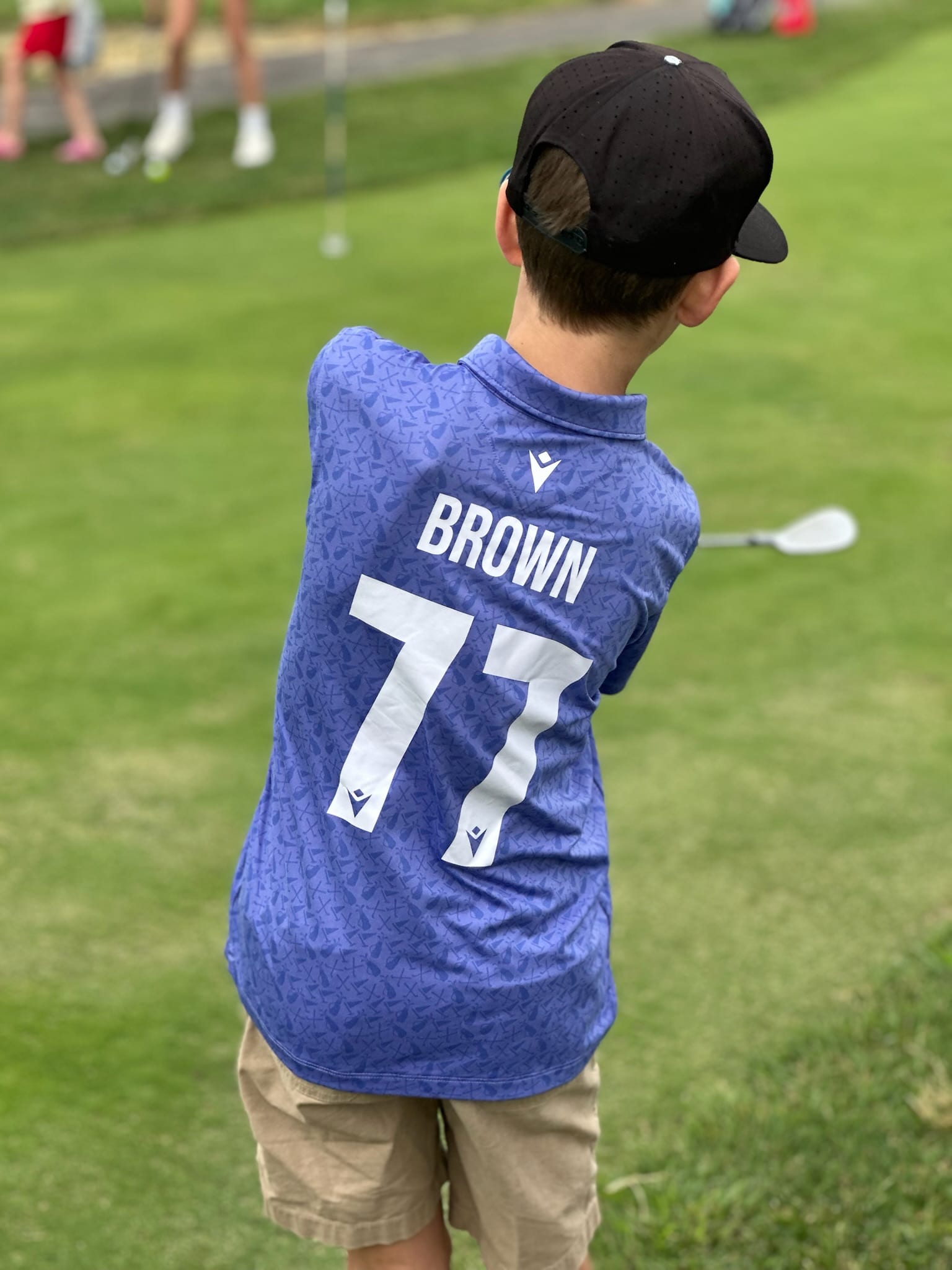
I came home Wednesday to my youngest, who’s ten, wanting to show me something on his laptop. He’d built a brand. Golf gloves. He’d seen a company a kid in Austin started making batting gloves out of good leather, and he decided golfers deserved the same thing. He had a name, a tagline, mockups, and a working prototype site where you can customize a glove. No checkout. No company. But he’d done every bit of it himself, on an afternoon I’d spent feeling like I was falling behind.
That’s the week.
I flew out to a manufacturing facility this week for the consulting side of things, and airports are where you find out what people are actually thinking. I talked to two people. One was a recent college grad who can’t get traction on anything — applications in, nothing back. The other was a few years from retirement and said he doesn’t recognize the workplace anymore. Neither one does anything close to what I do. Both were talking about the same thing.
Then I had a conversation with an old friend who knew me in my creative career. He’s flatlined in a job he doesn’t like. And he looked at me like I had the answer — like what we’re doing is free and interesting and brave. I had that conversation on a day I felt worse about our company than I had in months. Cash flow. The supplier change. A list of things to build that gets longer faster than we can work it.
I want to be honest that both of those things are true at once. He’s right about what we have. I’m right about what it costs.
So here’s what we actually did this week.
For months we’ve had a system designed and no time to build it. That’s the small-business trap in one sentence: the work that would fix the problem is blocked by the problem. And this week Audrey and I finally snapped. Not at each other. At the situation. We were exhausted enough to stop triaging and go build the thing.
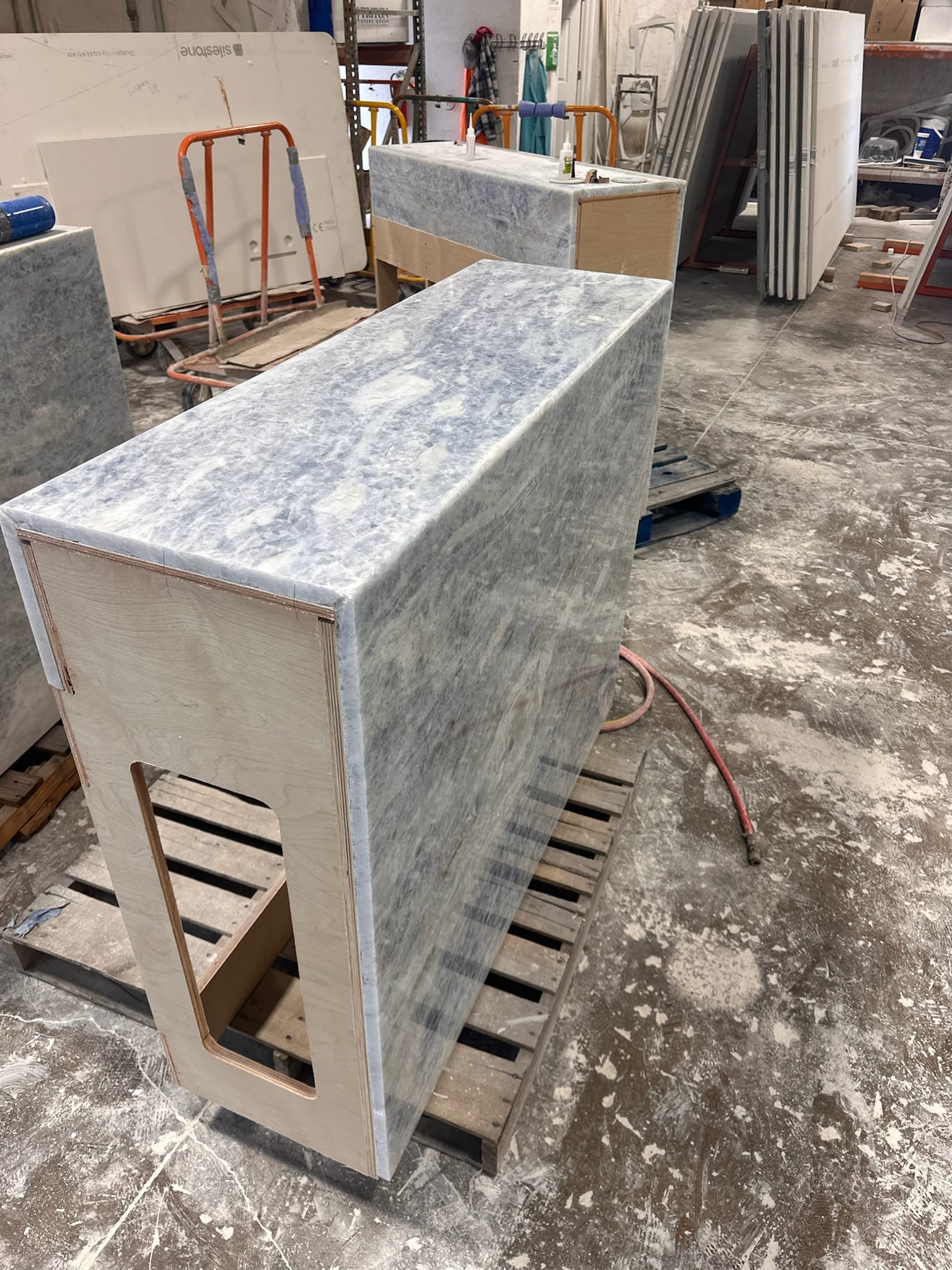
We have a stone shop that runs on documents. A builder sends a purchase order, and that PO doesn’t tell you much about what you’re actually making. The design lives in a color sheet, a cabinet layout, a plumbing portfolio, a flooring plan, the house plan, and a homeowner’s contract with the written specs. Six or seven documents, and the answer is the cross-reference between them. That’s where the errors live. Always has.
So we built a crew. Audrey named them, which is why they sound like they do.
Rundown Rodney takes all of it and produces the work order — we call work orders rundowns — for just our portion of the house, then flights it into our job calendars. Joe Tracy tracks the job from there: how many slabs, when to order, whether the sinks are in inventory, when it fabricates, when it installs. Scrapyard Sam calculates what’s left over from every slab and files the remnant in our catalog with its real dimensions, so the next job can be ordered against material we already own.
Above them sits a chief of staff we just call Agent, on its own account, which means Audrey or I can be standing in a parking lot with a phone and put any of it in motion.
We also finished two things that make us competitive in a way we weren’t a month ago. A plan analyzer that takes a commercial bid package — hundreds of pages — finds the pages with countertop dimensions, and lets us draw the areas that get stone, then outputs line-by-line dimensions and square footage. And a pricing agent, which is fully working, that turns that output, or honestly just an email where someone describes their kitchen, into a quote. Commercial, retail, retail discount, or Costco. We feed it the slab price and dimensions and it does the rest.
The last one is still in progress, and it turned out to be the most interesting thing we worked on. We call it the PO checker. Square footage on a purchase order is the product of someone reading the same stack of documents we read, and when two people work from the same plans they don’t always land on the same number. We found variances doing manual audits on a few jobs. Nobody’s fault — just the ordinary drift between documents and the humans reading them. So the checker compares our actual template file against the PO and catches the difference.
But here’s what we realized while building it. We are sitting on thousands of real template files. DXFs, cut from jobs that actually got installed, in houses that actually exist. Every one of them is ground truth. And we can compare them against every plan that’s ever been sent our way, whether that plan became a purchase order or just a bid we lost.
Nobody else has that. You can’t buy it and you can’t synthesize it. You can only get it by cutting stone for years and keeping the files.
That’s the moat, and it’s the same play on the Novaclad side. The app takes a LiDAR measurement with the phone in your pocket. We have laser-templated DXFs of the same kinds of spaces, accurate to a sixteenth of an inch. Put those side by side enough times and you can teach a model to close the gap. Phone cameras get better every year. Our reference data gets deeper every job.
The agents are the visible part. The data underneath them is the part that’s actually worth something.
I’ll say the quiet part. A lot of this exists because of a human gap I can’t close with more effort. Our GM grew up with his hands on stone. He taught himself CAD. He programs the pieces for our saw. He knows blades and tooling and how to keep a CNC running. He has made enormous leaps. But the part that’s data and calendar and margin — the customer experience, the numbers that decide whether a job made money — he can’t reach it. I’ve come to think he never will. That isn’t a character flaw. That’s the size of the leap, and it’s the same leap the man in the airport was telling me about.
So we stopped trying to close it by asking him to be someone else. We’re building the layer he can’t reach, so the part he’s genuinely excellent at stays worth what it’s worth.
The other thing we changed this week is small and I keep thinking about it. Our voicemail. We were losing people who’d leave a message with no context and a number, and we’re bad at phones — the phone is also where details go to die in this business. So we wrote a new message asking people to text or leave an email address, generated it with a text-to-voice model, and it sounds better than anything I’d have recorded. That’s the whole innovation. It’s working.
Meanwhile Novaclad launched Tuesday. Nineteen years married, and we put an app on the App Store. The release got picked up by Morningstar and Yahoo Finance and a long list of others. St. Louis Magazine is interviewing us Wednesday for a profile in their business section. All of which is real, and none of which has turned into money in the bank yet.
What I keep landing on is this. Everything we built this week is aimed at the same fear, which is that we can’t see what’s coming. Not in the market. In our own shop. The terror of a small business isn’t competition, it’s the detail you missed three weeks ago that shows up as a loss today. We have a skeleton crew. Audrey and I cannot cover the ground. So we’re building something that doesn’t get tired and doesn’t forget, not to replace the people we have, but so the people we have are working on what they’re actually good at.
And every time we finish something, the list gets longer. The Titan fab center is sitting there, tooled and powered, and we don’t yet know how to run it. We’ll get there. That’s another week.
I don’t think we’re ahead. I think we’re at the bottom of a very steep curve, and the next couple of years are going to be genuinely hard for a lot of people — the grad, the guy near retirement, my friend in the job he’s outgrown. What I felt this week wasn’t confidence. It was the narrower relief of moving instead of bracing.
Then I came home and a ten-year-old showed me a brand he built by himself.